
“Would you like to get coffee?”
For most of us, that’s an invitation. For Felicia M. L. Davis, it was for years a factual question. Her honest answer was “No, thank you, I don’t drink coffee.” She meant it kindly. What people often heard was rejection.
Most have asked that question hundreds of times without ever thinking about what they actually meant by it. How many moments at work land like that? Someone says exactly what they mean, and we fill the gap with a story of our own.
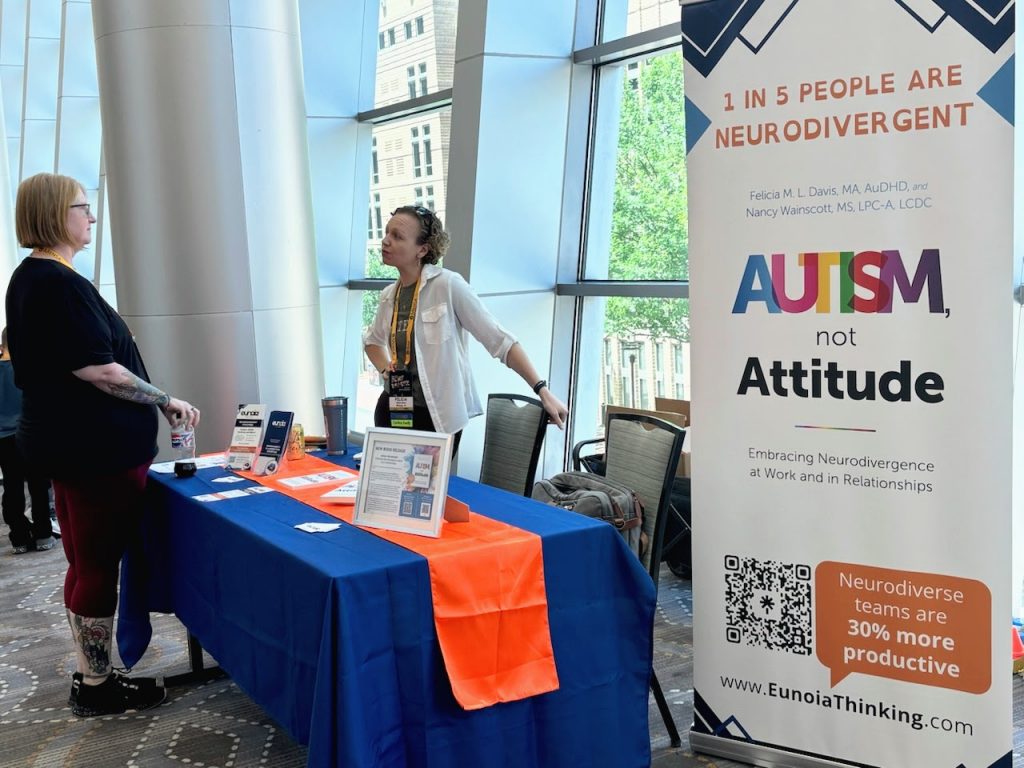
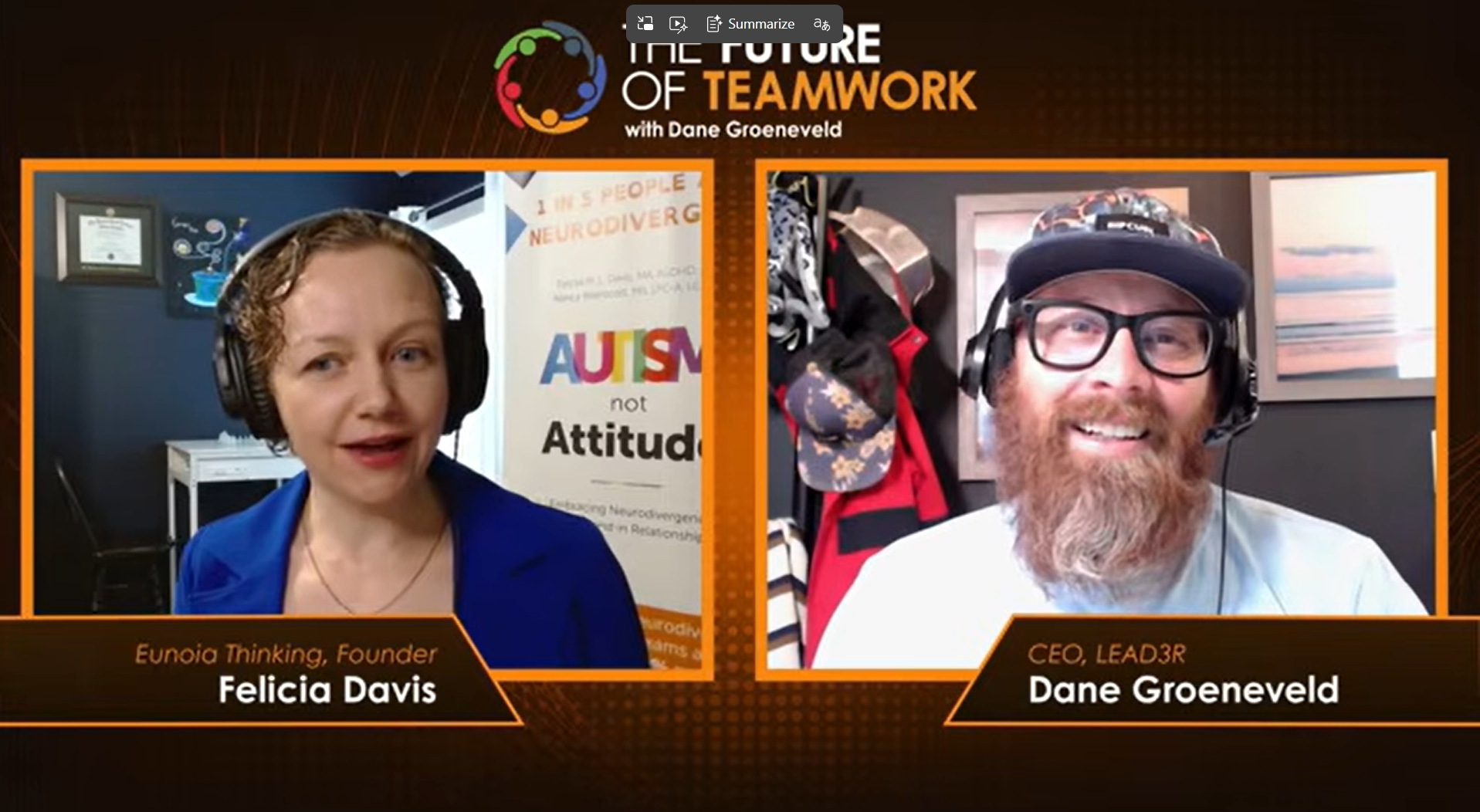
On this episode of The Future of Teamwork Podcast, Dane sat down with Felicia, founder of Eunioa Thinking and co-author (with Nancy Wainscott) of Autism, Not Attitude. Felicia is open about being diagnosed with autism and ADHD as an adult, after she was already deep into her career and raising kids. Understanding how her brain worked changed the course of her career.
Roughly one in five of us is neurodivergent. So the question isn’t whether it’s on your team. It’s whether your team is set up to benefit from it.
A few ideas from the conversation:
🔹 Masking is translating. Felicia compared it to someone who moves to a new country but has no accent to signal the difference. Every day they’re translating, and nobody knows they’re doing it. Imagine what that costs, and what gets freed up when the load is shared.
🔹 Add quantifiers. A friend once told her he grew up in a “small town.” It had two million people. We think we’re saying the same thing far less often than we assume.
🔹 “Everyone’s a little autistic” isn’t the empathy we think it is. We’ve all worn an itchy sweater. Now imagine every piece of clothing feeling like that, all day. Relating is a good start. Understanding goes further.
🔹 The person who stops the meeting may care the most. Sometimes the one saying “this doesn’t make sense” is the only one willing to name what everyone else is feeling.
And almost none of this costs anything. It’s mostly curiosity, clarity, and a willingness to ask “what if they meant something different?” before we assume the worst.
Great teams don’t happen by accident. They happen when people feel safe enough to think differently out loud.
Purchase Your Copy of the Book Today
Great teams don’t happen by accident. They happen when people feel safe enough to think differently out loud.
Because when we change what we see, we change how we approach a conversation.
And sometimes, the mind we misunderstand is exactly the mind the organization needs.