

Every organization already has neurodivergent leaders in the room.
Most of them just haven’t been given permission to lead as themselves.
That’s the real story behind neurodiversity and leadership — not a compliance checkbox, not an HR initiative, but a question of whether your organization can recognize and use the different ways its people already think. The leaders who figure this out first aren’t just doing right by their teams. They’re building a measurable advantage over the ones who don’t.
The Business Case Leaders Can’t Ignore
An estimated 15–20% of people are neurodivergent — autistic, ADHD, dyslexic, dyspraxic, or otherwise wired differently than the “typical” cognitive default most workplaces are still built around. That’s not a niche population. In many organizations, it’s one in five people on the org chart, whether or not anyone has said so out loud.
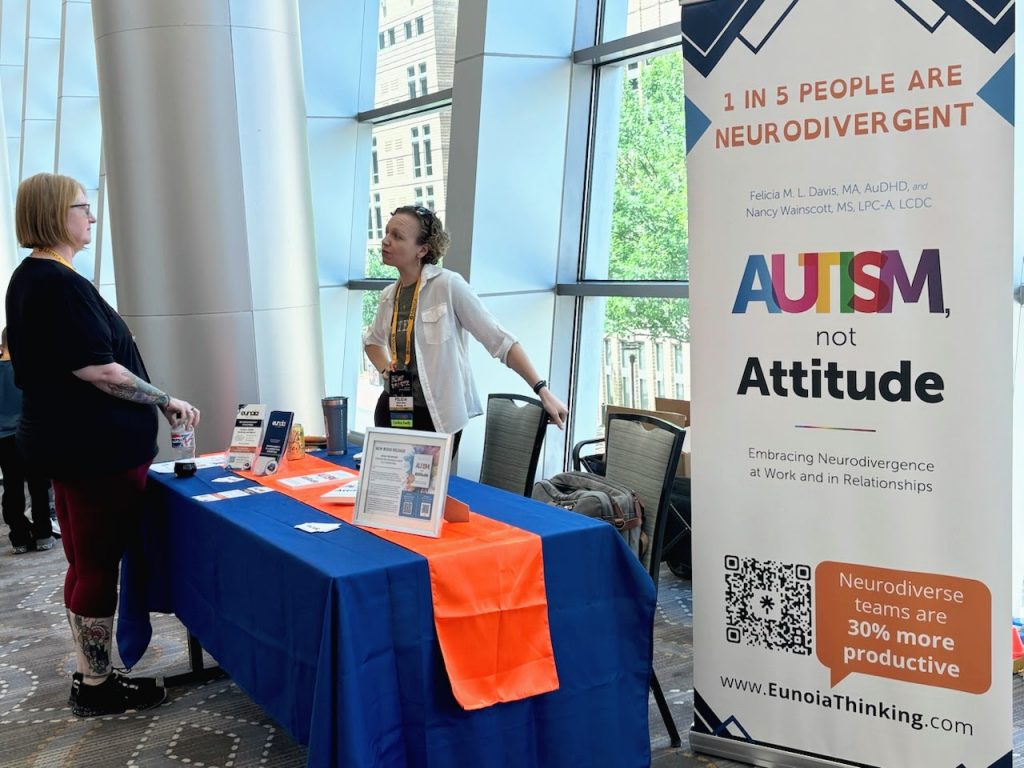
And the performance data is hard to argue with. Research cited by Harvard Business Review has found that teams with neurodivergent members can be up to 30% more productive. JPMorgan Chase’s neurodiversity hiring initiative reported participants were 90–140% more productive in their roles, with markedly higher accuracy. Teams with neurodivergent professionals have also shown retention rates near 90% — a number most leaders would love to see across the board.
Here’s the part that should change how leadership teams think about cost: an estimated 90% of workplace accommodations for neurodivergent employees cost nothing to implement. This was never primarily a budget problem. It’s a leadership skill gap.
What Most Leaders Get Wrong
If the business case is this strong, why isn’t every organization already leading this way?
Because most leaders were never taught to recognize neurodivergent thinking — only to manage around it. Roughly three-quarters of neurodivergent employees don’t disclose their diagnosis at work, largely out of fear of how it will be perceived. The vast majority say there’s a real lack of awareness among the managers directly responsible for their success. And formal training on any of this is still rare.
That gap doesn’t show up as a single dramatic failure. It shows up as friction that gets misread as a performance problem: the direct report who reads as “difficult” when they’re actually asking clarifying questions. The teammate who goes quiet in meetings and gets left out of decisions. The high performer who burns out because the accommodation that would have taken five minutes to set up was never offered.
Three Shifts That Turn Neurodiversity Into a Leadership Advantage
From compliance to competitive advantage. Neurodiversity work stalls when it lives entirely inside HR policy. It moves when leadership teams treat different cognitive styles the way they’d treat any other underused asset — something to actively deploy, not just tolerate.
From line item to culture. A single training session doesn’t change how a team operates day to day. Sustainable change means giving managers real tools: how to run a meeting that works for both fast-processing and slow-processing thinkers, how to give feedback that lands, how to build in the small structural changes that let different minds do their best work.
From assumption to vocabulary. Most conflict between neurodivergent and neurotypical colleagues isn’t a values conflict — it’s a translation problem. Leaders who learn the actual vocabulary of neurodivergent communication stop mistaking directness for rudeness, or silence for disengagement, and start reading their teams accurately.
I’ve Lived Both Sides of This
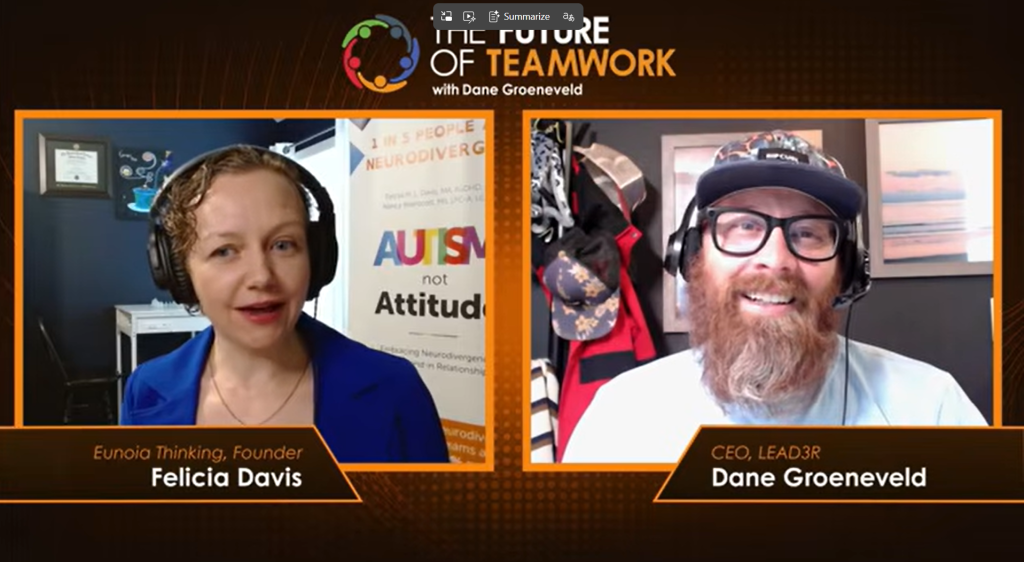
I’m not talking about this as theory. I’m autistic and ADHD, and I learned to work with my own brain instead of against it — a shift that took me from employee to leader to visionary, doubling my salary in less than two years, once I stopped trying to force myself into a neurotypical mold and started leading from where my brain actually is strong.
I wrote Autism, Not Attitude because I kept meeting leaders and parents having the same conversation I’d had with myself for years: mistaking a different way of thinking for a bad attitude, a communication gap, or a performance issue. It’s rarely any of those things. It’s usually just a leader who hasn’t yet learned to see what’s actually in front of them.
What This Looks Like in the Room
Audiences at organizations like Edward Jones and the Mensa Foundation have described walking away with a working vocabulary for neurodivergent communication, concrete accommodation strategies that cost little or nothing to implement, and — more than once — the first real understanding of a neurodivergent family member, direct report, or version of themselves.
One attendee put it simply after a session on neurodiversity and conflict resolution: “Helped me put myself in other people’s shoes.” That’s the shift this work is actually after. Not sympathy — accurate understanding, applied at the leadership level.
Bring This to Your Stage
Neurodiversity and leadership isn’t a future-of-work trend. It’s a present-day advantage sitting untapped in most organizations right now, waiting on leaders willing to learn how to see it.
If you’re planning a leadership offsite, an HR conference, or an all-hands and want a keynote speaker who brings the business case, the practical tools, and the lived experience to back it up, I’d love to talk about what that could look like for your organization.